
What is the Renters' Rights Act?
The Renters’ Rights Act is one of the most significant overhauls of the private rental sector (PRS) in England in decades. The first phase came into force on 1st May 2026 and aims to strengthen tenant security while raising compliance standards for landlords.
These wide-ranging reforms are reshaping the rental market, bringing an end to Section 21 evictions, restructuring tenancies, and introducing new regulatory requirements.
To help landlords, agents, and tenants manage the transition, the government are rolling out the Act in three stages.
Our Guide for Landlords explains the key changes and outlines the support we provide to help our landlords remain fully compliant.
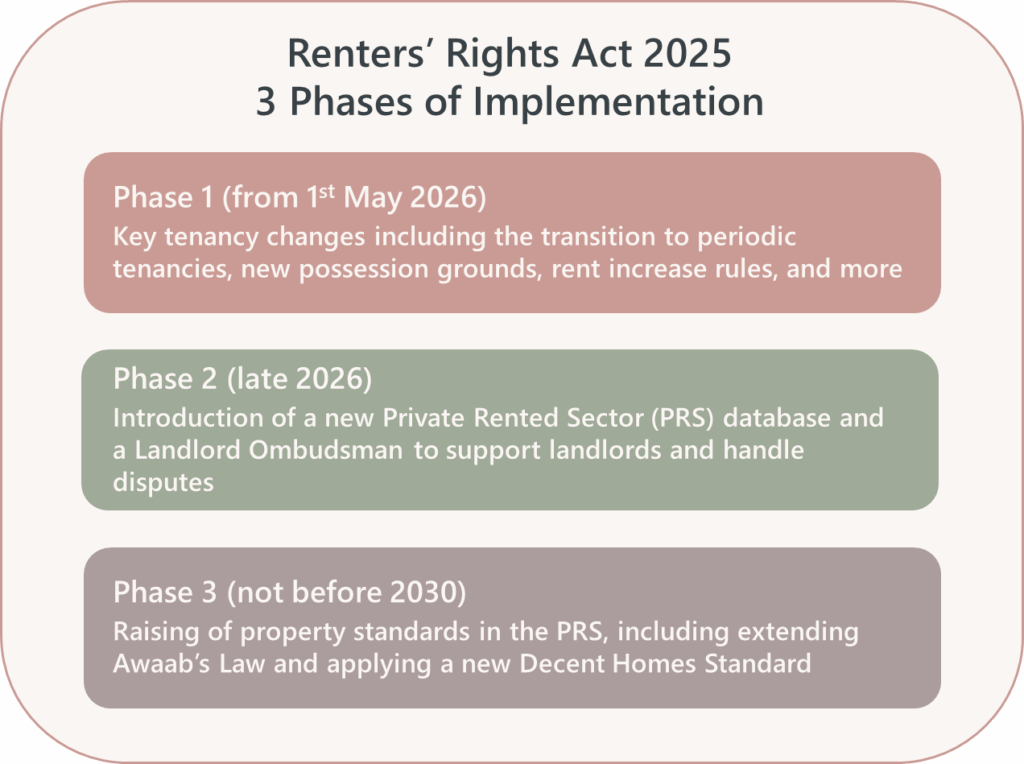

The major changes from May 2026
1. All tenancies are now periodic.
Fixed-term Assured Shorthold Tenancies (ASTs, the current standard contracts) have been immediately replaced by open-ended periodic tenancies. Tenants can give two months’ notice at any time.
2. Section 21 ‘no-fault’ evictions abolished.
New grounds for possession have been introduced under Section 8 including rent arrears, serious anti-social behaviour, selling the property, or needing to move in.
3. New rent increase rules.
Rent increases are limited to once per year and must reflect local market rents. Two months’ notice of increases is required, and tenants can challenge through a tribunal.
4. Ban on rental bidding and paying rent in advance.
You must advertise a fixed asking rent and cannot encourage or accept offers above it. Landlords may not request more than one month’s rent in advance.
5. New anti-discrimination measures.
You cannot refuse tenant applicants because they receive benefits or have children. Importantly, you can still carry out affordability checks and not grant a tenancy based on income.
6. Greater rights for tenants to keep pets.
Tenants have stronger rights to request a pet. Landlords must consider requests reasonably and respond properly.
Key questions for landlords with the Renters' Rights Act
To help landlords with the implementation of the Renters’ Rights Act, we have published a number of posts focusing on some of the key questions that landlords have been asking in readiness for the new rules.
How are tenancy agreements changing?
The traditional Assured Shorthold Tenancy (AST), created under the Housing Act 1988, has been replaced with a system based entirely on rolling ‘periodic’ tenancies.
In this post we explain how these changes impacts both existing and new tenancy agreements.


How are rent increases managed?
With the Renters’ Rights Act, the way landlords manage rent increases has become more structured, transparent and evidence-based.
When handled correctly, the new system allows landlords to protect rental income, reduce disputes and strengthen long-term tenancies.
What happens if my tenants want a pet?
Under the new legislation tenants have the legal right to request permission to keep a pet in their rented home.
So, what happens if your tenants ask to keep a pet? What are your rights to refuse consent? What is the process that needs to be followed under the law changes?

With the removal of Section 21, landlords in England must now rely on Section 8 grounds to regain possession of their rental property.
This post sets out the new, more structured rules on how landlords can gain possession of their rental property.
How we are supporting landlords?
We have closely tracked the progress of the Renters’ Rights legislation over the past two years and continue to stay on top of every detail as the changes come into force.
We factor the new reforms into all advice we give landlords and will continue to share further updates and add new information here as it becomes available.
If you’d like to discuss how the Renters’ Rights Act affects you, please get in touch for a confidential conversation.
If you don’t currently use our managed service and would like to learn more, we’d be happy to talk through how we can support you.